Bluets by Maggie Nelson: Assertion Without Demonstration
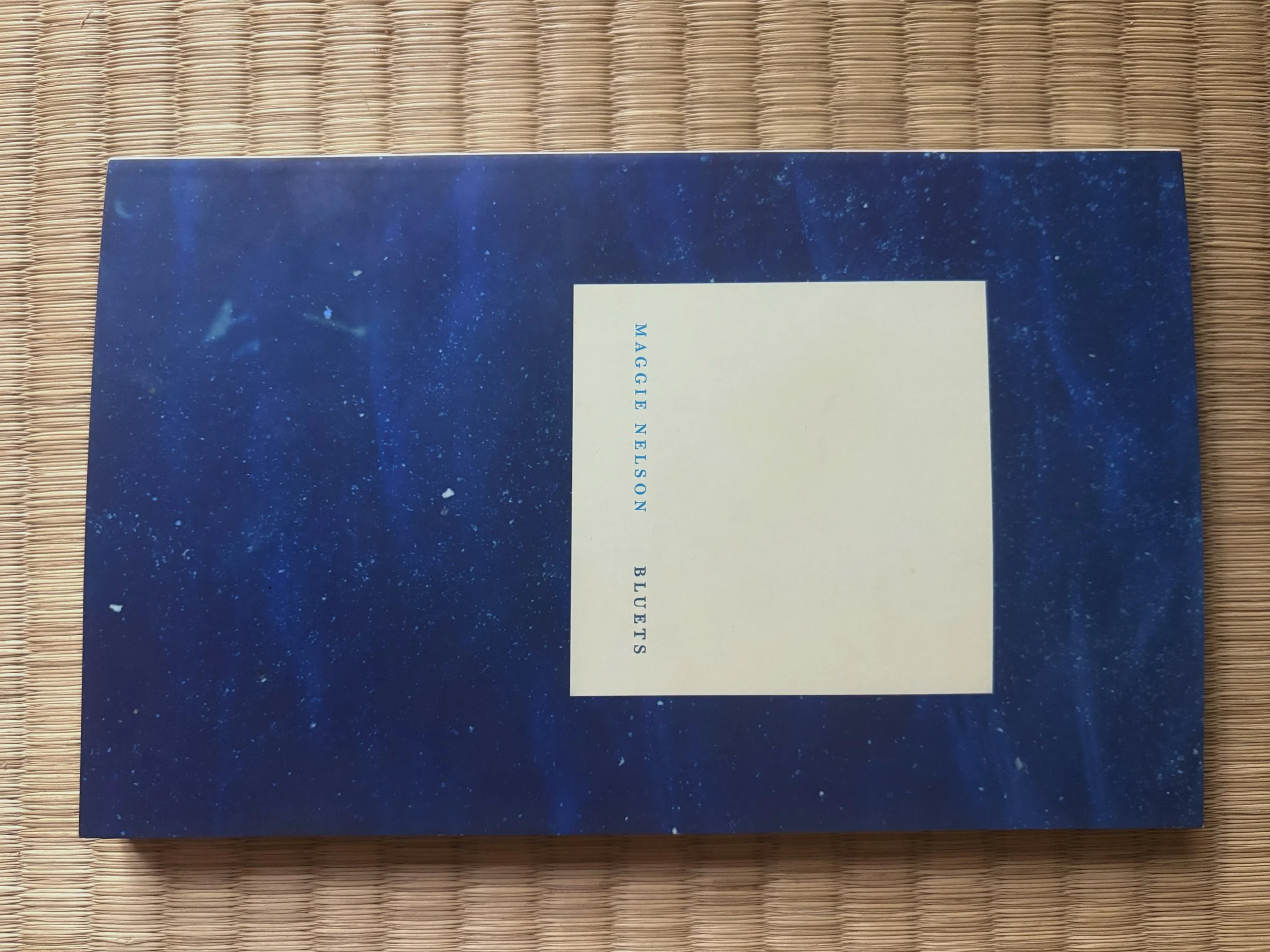
Bluets arrives numbered like a philosophical treatise—240 propositions, Wittgensteinian in architecture if not in execution. The form promises systematic inquiry into blueness across its perceptual, historical, and emotional registers. What it delivers is closer to a personal encyclopedia assembled by mood, where chromatic observation, erotic memory, and borrowed aphorism accumulate without quite cohering into argument.
The fragmented structure invites an obvious comparison: Barthes's A Lover's Discourse, where discontinuity is not a formal weakness but the argument itself: each fragment performing the broken, recursive logic of desire. Nelson attempts something structurally similar, but where Barthes makes the form do genuine philosophical work, she allows it to become permission for association without pressure. The gaps between propositions in Bluets are filled not by productive silence but by mood, and the accumulation that results feels less like a method than an evasion of one.
Her central gamble—that desire and grief and color are not merely analogous but continuous, that to be saturated by blue is structurally akin to being undone by a person—is not without interest. But she repeatedly asserts this identity rather than demonstrating it, and the prose rarely applies enough pressure to make the connection feel inevitable rather than wished for. The rawness she cultivates is perhaps deliberate, and it occasionally disarms; more often, it reads as tonal inconsistency, sentiment dressed as vulnerability.
And yet, one sentence justifies the read. "Blue is something of an ecstatic accident produced by void and fire." It does what the surrounding 239 propositions largely cannot—it stands alone, compressed and cosmologically serious, carrying both the theological weight of ecstasis and the materialist logic of color's physical origins. It needs no apparatus. That Bluets can reach this register at all makes its more indulgent passages harder to forgive, and its missed potential the more acute.